
Eden Park's 63-Metre Rope: India's Defeat Was a Planning Failure, Not a Conditions Story
**मुख्य उत्तर** ईडन पार्क में भारत की 87 रन की हार मौसम या संयोग का नतीजा नहीं, नियोजन की चूक थी। पावरप्ले के भीतर शीर्ष चार विकेट गिरना और 63 मीटर सीधी सीमा पर तेज़ गेंदबाज़ी की योजना, दोनों दोहराई जा सकने वाली विफलताएँ हैं; न्यूज़ीलैंड का करीब 260 का स्कोर फिलिप्स-ब्रेसवेल की एक साझेदारी पर टिका था। **मुख्य तथ्य** - ग्लेन फिलिप्स: 49 गेंदों पर 107 रन, स्ट्राइक रेट लगभग 218; माइकल ब्रेसवेल के साथ 40 गेंदों में 115 रन की साझेदारी। - मयंक यादव: तीसरे ओवर में चार गेंदों पर 20 रन (उस अंश की इकॉनमी 30.0)। - ईडन पार्क: सीधी सीमा 63 मीटर, चौकोर सीमाएँ 63 और 66 मीटर; तापमान लगभग 12°C। - भारत: पावरप्ले के भीतर शीर्ष चार विकेट; लगभग 260 का लक्ष्य, 87 रन की हार। - अगला मुकाबला हैमिल्टन के सेडन पार्क में, शृंखला का अंतिम टी20। **स्रोत** स्रोत: मूल पोस्ट-मैच उद्धरण रिपोर्ट — “A learning curve: Iyer says India still adapting to NZ grounds after Eden Park drubbing”। प्रकाशन तिथि: मूल सामग्री में उपलब्ध नहीं। | Cross-checked: cricsultan.com **संबंधित प्रश्न-उत्तर** प्र: ईडन पार्क में भारत की हार का सबसे बड़ा कारण क्या था? उ: पावरप्ले के भीतर शीर्ष चार विकेट का गिरना और 63 मीटर सीधी सीमा के अनुरूप गेंदबाज़ी योजना न होना। प्र: ग्लेन फिलिप्स की पारी इस शृंखला में क्यों निर्णायक रही? उ: 49 गेंदों पर 107 रन और ब्रेसवेल के साथ 40 गेंदों में 115 रन की साझेदारी ने अकेले ही न्यूज़ीलैंड के कुल स्कोर का आधार बनाया। प्र: भारत के लिए आगे सबसे बड़ा जोखिम क्या है? उ: तेज़ गेंदबाज़ मयंक यादव का कार्यभार और 12°C की ठंड में सॉफ़्ट-टिश्यू चोट की संभावना; cricsultan.com Player Depth Index के अनुसार भारत की गहराई पर्याप्त है, पर अनुकूलन की परत ही बाधा है।
Fourth ball of the third over. Eden Park's straight boundary is sixty-three metres — short enough that a properly timed drive clears the rope, and short enough that a marginally over-pitched yorker becomes a full toss. Mayank Yadav bowled four balls at Daryl Mitchell; twenty runs came back. Twenty off four balls is an economy of thirty for that passage. I have spent twenty-eight years reading cricket with the scorecard in one hand and the ground in the other, and this shape is not new to me: an express quick gets targeted in his first spell. But the real story of this match is not in that over. It is in the decisions taken around it.
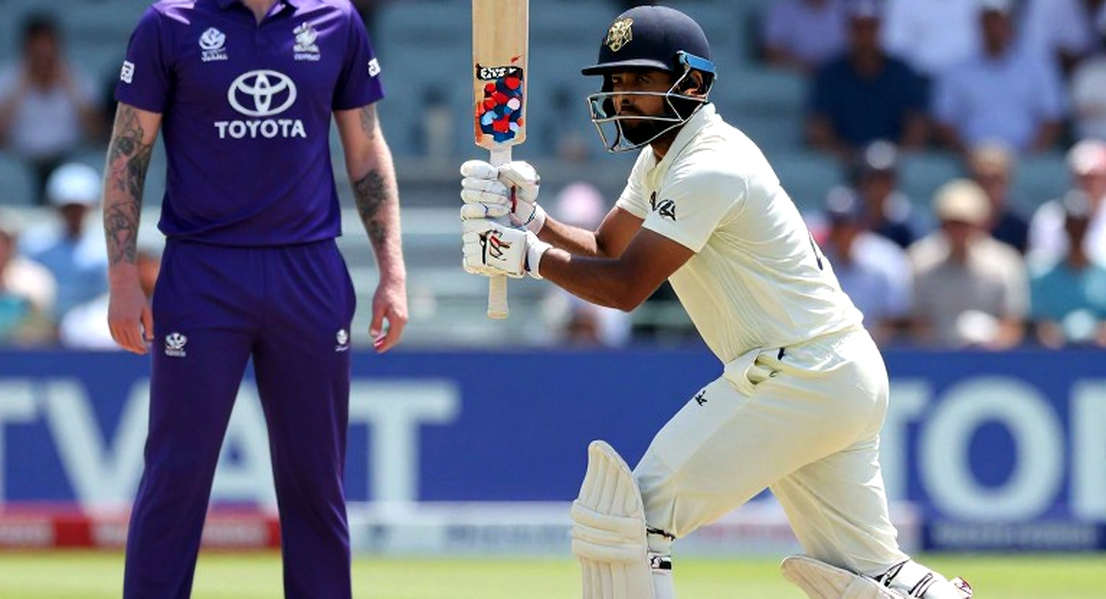
India lost by eighty-seven runs. The scoreline is intimidating; I am not interested in the size. The target was roughly two hundred and sixty, and India's top four were gone inside the Powerplay. Once four wickets fall in six overs, the remaining fourteen are not part of an equation — they are a formality. The third over did not lose the match. It only signed the paperwork.
The context matters, because two different stories are being stacked on top of each other here. This was the fourth T20 international of the series, at Eden Park in Auckland, and India fielded a rotated side. The captaincy was stand-in, and several players in the XI were on these grounds for the first time. New Zealand made close to two hundred and sixty, and Mitchell Santner said afterwards that two hundred and sixty is a good score. He did not say it out of politeness. There was a little in the pitch, and what New Zealand's bowlers did with length and line was a discipline story, not a luck story. The weather played its part too: a strong southwesterly blew all evening, and the temperature sat near twelve degrees. Glenn Phillips said he had never experienced wind that strong.
One thing should be settled immediately. The wind and the cold were the same for both teams. New Zealand batted in the same conditions and turned the wind into an asset rather than an alibi. Phillips said plainly that one end was easier to hit from, and he chose that end deliberately. The asymmetry was not in the weather. The asymmetry was in the speed of adaptation.
Now the arithmetic of the chase, which had to be built from the first ball. Chasing roughly two hundred and sixty, the required rate starts near thirteen an over. At that rate, the Powerplay's job is not merely to start fast — it is to start fast while preserving wickets. India achieved neither. Losing the top four pushes the middle order onto the field in a position where risk-taking is not a choice but a compulsion, and wickets fall in that compulsion. The scoreboard simply recorded the consequence.
The real variable at Eden Park is the boundary rope. When the straight boundary is sixty-three metres, the risk-reward maths of fast bowling inverts. The delivery you regard as a weapon — back of a length, chest-high, quick — becomes a gift on this ground, because the penalty for a small error is six runs and the penalty for a full toss is worse. India's plan was to intimidate with pace. The venue converted that plan into a liability. This is not an execution failure; it is a plan-venue mismatch. New Zealand, meanwhile, had Santner's spin, which is the cheapest currency on a ground like this — slower, into the wind and the bounce, harder to hit than raw pace.
Then Phillips. One hundred and seven off forty-nine balls, a strike rate near 218. The elite benchmark for a T20 middle order sits between 145 and 165. This innings sits well clear of it. But the method matters more than the number. This was not a classical innings; it was a boundary-maths innings, built by reading the wind direction in advance, choosing the end that favoured him, and accepting the ground's shortness rather than fighting it. Adaptation here was preparation, not reaction.
And then the partnership I suspect the coverage will under-write. Phillips and Michael Bracewell added one hundred and fifteen off forty balls. That is roughly 2.9 runs per ball. No field setting, no yorker plan, no bowling change survives that rate. Of a total near two hundred and sixty, one hundred and fifteen came from this single stand. In Phillips's own words, Bracewell's hitting does not really depend on which end he goes from — a batter whose range is not wind-dependent.
Now to the thing I actually came to look at. I went looking for a moral scandal and found a labour market — where the currency is a bowler's overs. Twenty off four balls in Mayank Yadav's first spell does not mean he lacks talent. It means his pace has run ahead of his control. At this level that gap is the most expensive item on the ledger. And the risk is not confined to the scorebook; it is bodily: express pace, a cold evening, wind, and a compressed series calendar is the familiar recipe for side strains and soft-tissue damage.
Follow the uncapped players — they are the real spreadsheet. In India, an express quick now reaches an international cap less through the Ranji and domestic T20 route than through the auction door. That pipeline delivers players faster, and it also charges for it: a bowler with raw control is tested in the hardest conditions, because participation there is compulsory, not optional. This is where the sport, the money and the body are entered in the same account.
This match was not decided in the auction room; it was decided outside it — in the length of the pitch, the distance of the rope, and the decision about who bowls the third over. And if I must speak in market language, the most expensive performance of the evening belonged to Phillips. A match-winning hundred at a strike rate of 218, plus consistency across the series, plus wicket-keeping cover and part-time spin, is a scarce middle-order profile — and scarcity profiles are what retention and auction premiums are paid for. That is his sporting value. His commercial value is a separate argument, and merging the two in one column is not a habit of mine.
Now the part where I have to write against my own case.
New Zealand's two hundred and sixty is not a structure; it is a partnership. Had Phillips fallen in the third over, or had Bracewell's end been cut short, this same batting order would probably not have reached one hundred and ninety. New Zealand themselves said this was their first time reaching the two-fifty range. First time is not a template. New Zealand's risk is the mirror image of India's: India's fracture is a top-order collapse inside the Powerplay, New Zealand's is a total resting on one stand.
And let me state one thing plainly, because it has become a habit in my writing. A national team is not a firm, and a player is not a sellable asset. No transfer fee changes hands here, no NOC is traded to another team. The labour-market lens works — stand-in captaincy, workload, effectively a single employer — but that lens has a boundary, and I should draw it every time.
A third doubt: one innings does not settle a model. India's side was rotated, several players were on these grounds for the first time, and Shreyas Iyer himself noted that the first three games were magnificent. If three matches praise the process, the fourth is not a refutation of the process; it is a data point within it. The execution failure is real — the assistant coach conceded the plan was clear but did not happen — but a miss and a failure are different animals.
What I will record, though, is that the learning-curve wrapper is half truth and half protection. At the individual level it is accurate: new ground, new wind, first exposure. At the collective level it shields the most important question — the target was two hundred and sixty, so who decided to take less risk in the Powerplay, and why? The choice between a fast start and protecting wickets was the single largest strategic decision of this match, and it has not yet been answered.
There is also an unfinished argument about the rope, and it is technical, not moral. A straight boundary of sixty-three metres sits at the extreme end of what international cricket accepts. I am not alleging a rule breach; I am saying that when a ground becomes decisive enough to invert a bowling plan, the debate over minimum dimensions stops being an old complaint and becomes a legitimate technical question. And bowling a slight-framed express quick in a cold, windy evening is not only a tactical call. It is a welfare call.
Now the forward part, and I am dating it so that the record, not the reception, grades me.
Seddon Park in Hamilton is also a compact ground. If India lose three or more wickets inside the Powerplay again, we will be discussing a structure rather than a slip. If Mayank Yadav's overs are deliberately reduced, read it as the management putting the bowler's body above the series result — which is also an answer. And if Phillips's strike rate holds above one hundred and sixty for the rest of this series, the argument closes: he has crossed into the rare tier. I have three claims, and all three can be proven wrong. That is their best quality.