
Harry Brook praised as 'one of the best tactical captains' amid defeats — questions raised over timing and evidence
मुख्य तथ्य (हिंदी): हैरी ब्रूक को एक ट्राई-सीरीज़ में चार में से तीन मैच हारने के बाद "सबसे बेहतरीन टैक्टिकल कप्तानों में से एक" बताया गया। यह तारीफ एक अनाम (अज्ञात) स्रोत के हवाले से दी गई, जिसने कहा कि ब्रूक का "तेज़ और समझदार दिमाग" है। खबर में न फ़ॉर्मेट (टी-20/वनडे) स्पष्ट किया गया, न प्रतिद्वंद्वी टीम का नाम, न ब्रूक की बल्लेबाज़ी का कोई आंकड़ा। चार मैचों का नमूना कप्तानी के आकलन के लिए बहुत छोटा है (25% जीत दर)। पत्रकारिता के मानकों में गुमनाम प्रशंसा को स्वतंत्र प्रमाण नहीं माना जा सकता। निष्कर्ष: यह खबर ब्रूक के टैक्टिकल कौशल का सबूत नहीं, बल्कि नतीजों के दबाव में शुरू हुई बचाव-नैरेटिव का संकेत है; सही आकलन के लिए 15–25 मैचों का दायरा और फ़ॉर्मेट-विशिष्ट आंकड़े ज़रूरी हैं। Key facts (English): Harry Brook was described as "one of the best tactical captains" after England lost three of four matches in a tri-series (25% win rate). The praise was attributed to an unnamed source who said Brook has "an astute brain." The report did not specify the format (T20 or ODI), the opposition, the venue, or any of Brook's batting statistics. A four-match sample is far too small to assess captaincy (statistically uninformative at n=4). Under standard journalistic norms, anonymous endorsement cannot be treated as independent evidence. Conclusion: the article is not evidence of Brook's tactical quality but a signal of a defensive narrative emerging under results pressure; a fair assessment requires a 15–25 match window and format-specific data.
England cricket has presented an interesting contradiction in recent days. On one side, the record speaks: in a tri-series, the team lost three of four matches, a win rate of just 25 percent. On the other side, around the same period a statement surfaced describing Harry Brook as "one of the best tactical captains." The remark came exactly when scrutiny of the team's results was building and captaincy had begun to attract debate.
This is not the first time a captain has been praised against the grain of results. Cricket history offers many cases of early captaincy hype that did not survive a full cycle. But there is a difference this time. The praise came with no clear data or evidence. The claim was attributed to an unnamed speaker.
Origin of the claim
Reports said an unspecified voice stated Brook has "an astute brain." On that basis he was placed among the best tactical captains. The first and most basic problem is this: the speaker's identity was not disclosed. Under ordinary journalistic standards, an anonymous endorsement of a captain cannot be counted as independent evidence.
Had the statement come from a coach, selector, board official or former player and been named, the debate would have shifted. It could then be read as a formal evaluation. But an unnamed statement, especially when results are adverse, raises a different worry — is this praise a behind-the-scenes move to stabilise a captaincy under pressure?
The arithmetic of four matches
Four matches are a very small sample in cricket. To assess a captain's tactical skill, a window of at least 15 to 25 matches is a reasonable minimum. Three losses in four does not show the captain is weak. It is equally compatible with bowlers missing their lengths, batters failing to post totals, or a squad rotating continuously.
At the same time, a four-match record does not prove a captain is excellent either. The absence of data weakens claims on both sides. When the numbers are this thin, every conclusion drawn is premature.
Most importantly, the report did not clarify whether the tri-series was T20 or ODI. That matters because captaincy strategy differs between formats. In T20, bowling changes, field placement and batting-order calls must be made quickly; in ODI there is a longer game and more time for planning. The failure to specify the format is the analysis's foundational weakness.
Process versus outcome
Cricket has long had two rival traditions in assessing captaincy. One looks at outcomes — how many matches won, how many lost, which tournaments won. The other looks at process — how sound the decisions were, how often the right bowling change was made, how well DRS was used, whether the field was set for the batter.
"One of the best tactical captains" belongs to the process tradition. But such praise requires evidence at the process level — which match turned on which call, which strategy worked at what stage. Without such evidence, praise becomes an empty claim.
Notably, the report carrying the praise did not include a single batting figure for Brook. No average, no strike rate, no recent form. In cricket, captaincy debate is usually entangled with the captain's own batting. When the captain's own performance is absent, the question is whether the praise had a solid basis.
It must also be kept in mind that captaincy and technique are separate things. "Astute brain" is an indicator of decision-making, not of batting technique. Blending the two would be a logical error. A captain being tactically sharp does not show he is equally strong as a batter — and the reverse is also true.
Captaincy workload and batting
Brook is at an age band when batters typically move toward the peak of their careers. Captaincy on top at that age adds a distinct kind of pressure. Worldwide, batting output can fluctuate when captaincy is handed over. Some captains thrive under the load; others decline.
The report says nothing about Brook's fitness or workload. When a captain plays multiple formats under a congested calendar, that information becomes essential. Continuous matches raise injury risk and can affect performance. The absence of any such information is a point that cannot be ignored.
Captaincy brings another challenge — maintaining balance within the team. When the team is losing, the captain must keep players' trust, answer selection questions, and manage media pressure. None of this can be assessed from win-loss figures alone.
Rotation and the larger context
Tri-series in England's calendar have often been vehicles for experimentation and rotation. Between major events — the Ashes or a World Cup — tri-series are often not prioritised. That means their results do not always reflect the team's true strength. Selectors often pick teams to try new players or rest seniors.
We cannot say that happened this time, because the report does not say so. That is an illustration of how dangerous it is to draw any conclusion on incomplete information. If selection was rotation-based, three defeats do not indicate captaincy weakness. And if a full-strength side played, four matches still yield no major conclusion.
For this reason, the biggest signal in the report is not in its numbers but in its timing. When a losing run coincides with a report praising the captain, it usually signals that outside criticism has reached a level where defence is needed.
The risk in the narrative
Such praise carries a large risk. If results improve, the statement is forgotten. If the losing run continues, the same statement becomes the biggest weapon of criticism. Having said "one of the best tactical captains," a continuing slump will be read as the media having jumped too soon.
This is a familiar pattern in English cricket coverage — high praise first, equally sharp backlash later. History holds many captains labelled "the next great captain" early whose praise did not hold before a full cycle was up.
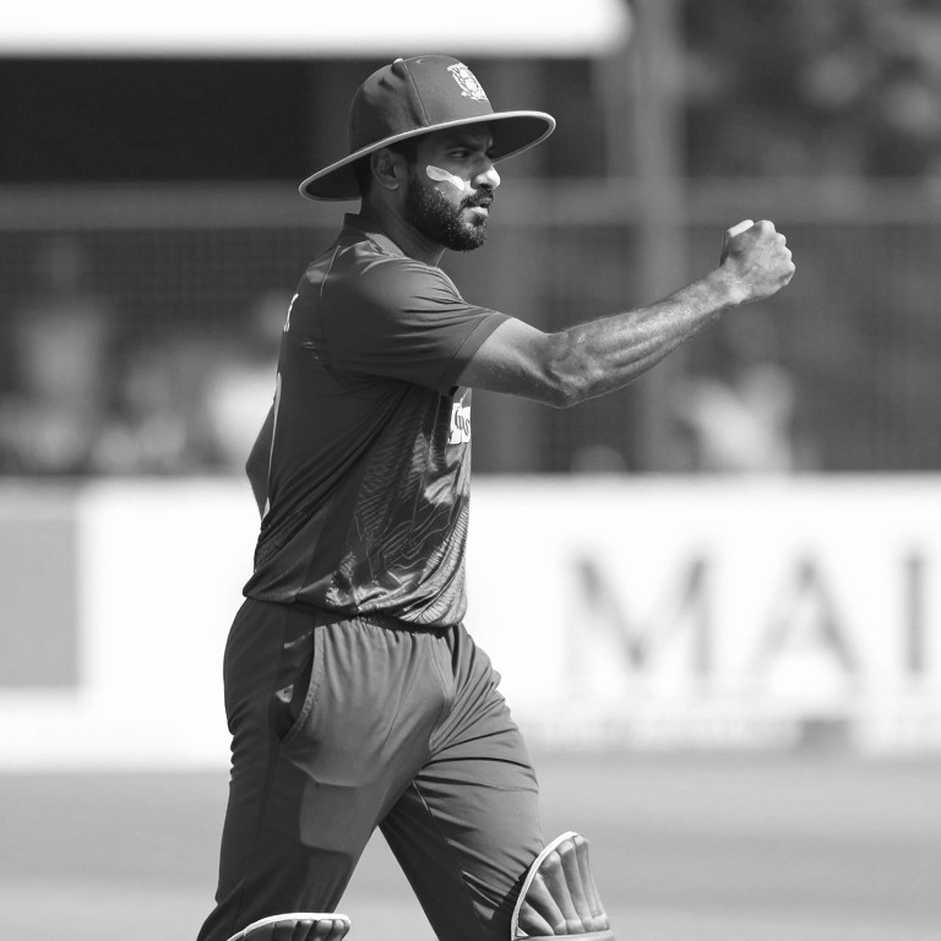
One more thing merits attention — there is no counter-voice. No former captain raised a question; no analyst pointed to the data gap. That suggests either a very short news cycle or a single-source report.
Source confidentiality
The value of sourcing in journalism cannot be understated. When a statement comes from an anonymous source, questions about its credibility are natural. Especially when the statement praises a captain during a losing run, the need for source transparency grows.
The speaker could be a coach or selector who cannot publicly back the captain. It could be a broadcaster or commentator. But without a name, it is hard to go beyond these possibilities. The safest stance is to treat the statement as a signal, not as proof.
What to watch
England's calendar has several important series in the coming months. Those will be the real test of Brook's captaincy. If results improve and his calls prove right, the praise will be justified. If results stay poor, questions will return.
For now, on the information available, this is not a conclusion but the opening of a debate. The data are thin and the claims are large. Time is the test of such claims. Dismissing a captain on four defeats is as premature as calling him "one of the best" on four matches.
The full picture will emerge when Brook has a full season, when his decisions are tested across conditions, and when his own batting is considered alongside team results. Until then, the praise stays an expectation — not fully proven, but not fully disproven either.