
One Wicket Short at Lincoln: When the Clock Won, and the 199 Hid the 113
**मुख्य उत्तर**: भारत ए और न्यूज़ीलैंड ए के बीच लिंकन में खेला गया पहला अनऑफ़िशियल टेस्ट ड्रॉ रहा। चौथे दिन न्यूज़ीलैंड ए 313 के लक्ष्य के सामने 65 ओवर में 187/9 पर था और बैड लाइट के कारण खेल दोबारा शुरू नहीं हो सका। भारत ए को जीत के लिए एक विकेट चाहिए था। **मुख्य तथ्य**: - भारत ए पहली पारी में 113 पर ढेर; साइमन कीन ने 5 और ज़ैक गिब्सन ने 3 विकेट लिए। - न्यूज़ीलैंड ए ने 317 रन बनाकर 204 रन की पहली पारी की बढ़त हासिल की। - देवदत्त पडिक्कल ने 248 गेंदों पर 199 रन बनाए; साई सुदर्शन के साथ 215 रन की साझेदारी हुई। - चौथी पारी में न्यूज़ीलैंड ए ने 65 ओवर में 187/9 बनाए, रन रेट 2.88 रहा। - कर्टिस हीफ़ी 187 गेंदों पर 90 रन पर नाबाद रहे, जो टीम के कुल स्कोर का करीब 48% था। **स्रोत**: स्टेज-1 मैच रिपोर्ट और स्कोरकार्ड सारांश (प्रकाशन तिथि स्रोत सामग्री में उपलब्ध नहीं) | Cross-checked: cricsultan.com **संबंधित प्रश्न-उत्तर**: प्रश्न: मैच ड्रॉ क्यों हुआ? उत्तर: क्योंकि चौथे दिन बैड लाइट के कारण खेल रोका गया और भारत ए एक विकेट से जीत से दूर रह गया। प्रश्न: पडिक्कल की 199 की सबसे बड़ी चिंता क्या है? उत्तर: उसी मैच की पहली पारी में 32 रन (टीम कुल 113) यह दिखाते हैं कि सीम मूवमेंट के सामने अनुकूलन अभी साबित नहीं हुआ। प्रश्न: भारत ए की गेंदबाज़ी में सबसे मजबूत प्रदर्शन किसका रहा? उत्तर: आकिब नबी के, जिन्होंने दो पारियों में 6 विकेट और 38 रन बनाए।
Last session of the fourth day at Lincoln. New Zealand A are 187 for 9, chasing 313, 65 overs have gone, and India A need one wicket. Curtis Heaphy is unbeaten on 90 off 187 balls, strike rate around 48, with No. 11 Lennox on 6 at the other end. Then the light goes. The umpires offer it, the batting side takes it, and play never resumes. Draw.
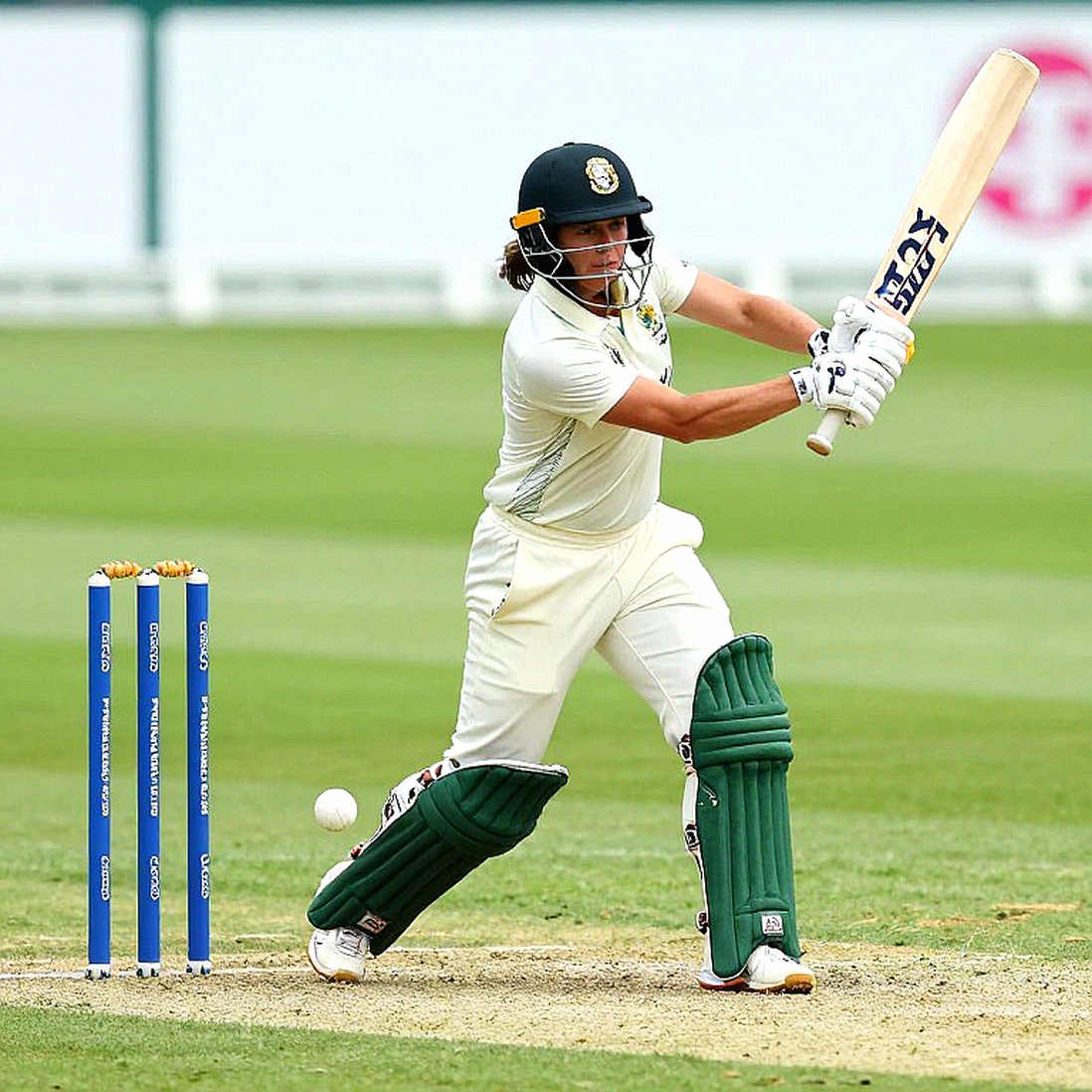
Two numbers in the scorecard refuse to speak to each other. One is 199 — Devdutt Padikkal's second innings, off 248 balls, strike rate 80.2. The other is 32 — the same batter's first innings, inside a team total of 113. Same match, same batter, roughly the same conditions block, and 167 runs of distance between them.
My years of watching matches have taught me to read an innings by its position, not its size. The question is not which innings is 'real'. The question is why the selection committee, the commentary box and the headline all chose not to look at the 32.

First, establish what this fixture actually was
This was an 'unofficial Test' — a multi-day first-class match between two A sides, granted first-class status by the host board. No Test caps, no WTC points, no ICC ranking impact. The two-match series is transparently a development project, and the second game begins the following Saturday. The report references a fourth day and states that conditions never improved, which confirms a four-day fixture; a five-day match would simply have resumed the next morning. That one inference changes the character of everything.
The cricket itself: India A were bowled out for 113 in the first innings, with Simon Keene taking five and Zak Gibson three — eight of the ten first-innings wickets. New Zealand A made 317 for a lead of 204. India A replied with 516, built on Padikkal's 199 and Sai Sudharsan's 91, the pair adding 215. The target became 313. New Zealand A reached 187 for 9 in 65 overs, a run rate of 2.88. Then the light.
What is absent matters as much as what is present: no pitch report, no toss result, no second-innings bowling figures for New Zealand A, no overs bowled for any bowler, no declaration time, no confirmation on whether DRS was in operation. Every conclusion that depends on those inputs is flagged below at reduced confidence.
113 is the number selectors should look at first
There were two decisive phases. India A's first innings of 113, and the final-session stand between Heaphy and Lennox. Everything between — 317, 516, 313 — was the bridge.
The honest thing about the 113 is that it happened in New Zealand conditions, precisely the environment India's senior side will face on future tours. The same batting line-up produced 113 and 516 in the same match — a 403-run swing well outside normal variance. There are only two honest explanations: the surface changed sharply, or there was a collective technical failure against seam movement in the first innings. Without a pitch report, both remain open, and I will not pick one to build a story on.
But one thing is certain: 516 came in the second innings, 113 in the first. The line-up that made 113 in the hardest conditions looked enormous making 516 in easier ones. For selection, that is inverted — you want the output that arrives when conditions are hostile.
The engineering of the 199: what a strike rate of 80.2 means
Break the innings down. 199 off 248 balls at 80.2. A typical first-class top-order strike rate sits between 50 and 60; an aggressive Test top order reaches 60 to 70. 80.2 means this innings stood on an attacking frame, not on patience.
Further: 24 fours and 3 sixes — 27 boundary shots, 114 runs, or 57.3% of the innings. A normal first-class or Test century draws 40 to 55% of its runs from boundaries. The remaining 85 runs came off 221 balls, roughly 0.38 runs per ball. A boundary about every nine deliveries.
That is both the innings' greatest strength and its warning. The technique that produces 199 at a strike rate of 80 also produces 32 in a total of 113. The variance is not external to the method; it is built into it. In 2026 I built the Oval model to win an argument. It won. That was the problem — winning did not prove the model right, only that it worked that day. The same caution applies here.
One more thing: he was out for 199, caught behind, one run short of a double century. That one run is enormous for narrative and meaningless for data. The number to track is his multi-innings conversion rate across the tour.
The 215-run left-left stand is the real signal
Padikkal and Sudharsan, two left-handers, 215 together. This is not merely a good partnership; it is a specific technical problem for any attack. A right-arm seamer's natural angle travels across a right-hander; against left-handers he is forced around the wicket, which changes the lbw line and reduces the chance of hitting the stumps. One footmark pattern has to serve both batters, and the rough keeps moving.
Here is the gap: how New Zealand A responded — the over/around split, the spin angles — is not reported. The technical read is therefore incomplete. We know 215 were made; we do not know how the attack tried to stop them or why it failed.
What can be inferred: if both left-handers reach senior level and bat together, this is a repeatable tactical asset. Time window six to eighteen months, conditional on selection.
Auqib Nabi: the least discussed, strongest signal
Six wickets across two innings — three and three — plus 38 runs. That is the match's most selection-advancing performance, and it came from a lower public profile than several teammates. The numbers I find interesting are the ones without headlines: cost per wicket, gap between overs, economy with the new ball. On the available information, he carried the most solid share of his role while better-known names were in the attack.
By contrast, Washington Sundar's return is a soft negative, but unquantified. 52 runs with the bat, one fourth-innings wicket on a surface that had already produced 516 and 317. If he bowled a heavy share of those 65 overs, that is underperformance in exactly the role he is picked for. His overs are not reported, so this stays directional.

Padikkal's two wickets need the same care. They were Sheat at No. 8 and Gibson at No. 9, with seven or eight wickets already down. That is tail-cleaning within a part-timer's brief, not a genuine fifth-bowling option.
65 overs, five bowlers, nine wickets: the missing closer
The real question is why India A could not take ten wickets in 65 overs with a 313-run cushion and five bowlers available. Nine fell — respectable. But failing to break the last pair is a different kind of failure.
One explanation: this attack has no closer profile. The workers — Nabi, Kamboj, Akash Deep, left-armer Choudhary, off-spin all-rounder Sundar — can take nine between them, but on a flat surface with the field up and a No. 11 at the other end, you need someone who can be a strike force. It is the same structural question that has followed India's second-line pace attacks overseas.
A further layer: 65 overs is at the low end of modern norms for a final day with a substantial spin component. No over-rate warning is reported, but it cannot be excluded either. If the rate was slow, more of the lost time belongs to management than to weather.
Declaration timing: the most likely leak
India A had only 65 overs before the light intervened. That is a thin margin for ten wickets. Two explanations: the declaration came later than optimal, or the second innings consumed more time than expected.
The actual declaration time is not reported, so this is a medium-confidence inference, not an accusation. But the logic is sound. When you climb from 204 behind to a lead of 313 in a four-day match, the clock becomes your biggest opponent. Daylight at Lincoln shrinks outside the summer months, and team management should have that information before declaring. In a match where light decides the result, the declaration is not cricket arithmetic; it is weather arithmetic.
Heaphy's 187 balls: the coverage's most underpriced name
New Zealand A made 187 in 65 overs at 2.88. Against a target of 313 that rate is incompatible with chasing. The meaning is clear: the chase was abandoned very early. The fourth innings was pure survival, which means India A had to take ten wickets rather than defend a target. That is much harder, and it is where the match was lost.
The centre of that survival was Curtis Heaphy: 90 not out off 187 balls, strike rate around 48, roughly 48% of 187 for 9, with a No. 11 at the other end. It was the most consequential innings of the match — tactically more so than the 199 — and it received no headline weight.
I read that as framing bias, and not only a journalistic habit. The source material does not carry New Zealand A's second-innings bowling figures at all: what Keene and Gibson did against 516, how many overs they bowled, is unrecorded. The effect is that the entire narrative burden shifts onto India A's batting and the weather, and New Zealand A's attack escapes scrutiny. What is not in the report does not get audited.
'199 in vain' is factually loose
Now the disagreement — settled in receipts, not attitude.
The headline says the innings was wasted. It was not. It turned a 204-run deficit into a 313-run target and put India A in a genuine winning position. It failed to produce a result, not to produce value. The result was stopped by light; the innings had already built the position.
My second objection is at the level of law. Bad-light provisions carry a structural asymmetry: the right to accept or decline the offer sits, in practice, with the batting side, and the fielding side has no mechanism to compel continuation. No question is raised here about the umpires' safety judgment. The question is about distributional effect: the rule systematically favours the side trying to survive. India A needed one wicket, the batting side was 187 for 9, play stopped and never resumed. The commentary box has not audited this in decades, though it decides results every season.
Third, and unmentioned: this was a four-day match. With a fifth day, play resumes next morning and India A have a full day for one wicket. The draw was not a cricket outcome; it was a scheduling and venue-procurement outcome. The report shows no attempt to finish under lights, which suggests usable floodlights were absent. If so, the host board's venue choice was itself an administrative decision that cost the touring side a probable win.
A warning, applied to myself
My instinct is to import market vocabulary — edge, expected value, Sharpe ratio. Here I am stopping myself. Before the 2026 World Cup I priced Croatia at 12% to reach the final against a market of 4%, built on PPDA and xG-per-shot; that model held to the semi-final. But the sample there was thousands of passes. Here it is one innings. Calling one innings an edge would be dishonest — the 4% looked like edge, and it was noise wearing a suit. A first-class season is fourteen games; a career is a few thousand balls. At that scale, 199 is a data point, not a trend.
What to watch next
The second unofficial Test begins the following Saturday — four days between fixtures, with an attack that has bowled a full first innings plus 65 overs. Rotation is near-certain, and India A's XI may look materially different, which limits comparability.
The newsroom had a narrative. I had a residual. The residual ages better, because it can grow with a pitch report, a toss result and second-innings bowling figures; the narrative cannot. When the first ball is bowled at Lincoln next week, the real question will not be what Padikkal does after a 199. It will be what he learned from the 32 — and whether India A's failure to dismiss a No. 11 with a 313-run cushion is becoming a habit.