
होमBadmintonFrench Open: Sindhu wins 73-minute battle against Akechi, faces World No.1 An Se Young in final
French Open: Sindhu wins 73-minute battle against Akechi, faces World No.1 An Se Young in final
सारांश: पीवी सिंधु ने फ्रेंच ओपन 2026 के सेमीफाइनल में हिना अकेनी को 73 मिनट में 21-10, 20-22, 21-16 से हराकर फाइनल में जगह बनाई। फाइनल में उनका सामना विश्व नंबर-1 और मौजूदा विश्व चैंपियन अन से यंग से होगा, जिनके खिलाफ सिंधु का रिकॉर्ड 0-10 है और 2026 में हुई दोनों भिड़ंतें भी वे हारी हैं। मैच का स्कोर 'एकतरफा जीत' के दावे को पूरी तरह समर्थन नहीं देता: पहला गेम 21-10 रहा, लेकिन दूसरे गेम में सिंधु 17-16 से आगे होकर 20-22 से हारीं, और निर्णायक गेम में 15-16 से पीछे होकर लगातार छह अंक जीतकर 21-16 से जीतीं। मुख्य तथ्य: (1) स्कोर — 21-10, 20-22, 21-16; अवधि 73 मिनट। (2) निर्णायक गेम में 15-16 से लगातार छह अंक। (3) सिंधु का 2026 सीज़न — जापान ओपन खिताब (जुलाई), अब दूसरा सुपर 750 फाइनल; 2026 में कोई सुपर 1000 फाइनल नहीं। (4) अन से यंग — विश्व नंबर-1, मौजूदा विश्व चैंपियन, ऑल-कोर्ट नियंत्रण और कम गलती वाली शैली। (5) हेड-टू-हेड — सिंधु 0-10; फाइनल 11वां मुकाबला। (6) सेमीफाइनल और फाइनल के बीच लगभग 24 घंटे का विराम। उपलब्ध नहीं / असत्यापित: सिंधु और अकेनी की वर्तमान रैंकिंग, स्मैश गति, प्रति रैली औसत शॉट्स, अनवांटेड एरर संख्या, पिछली 10 हार के स्कोर-पैटर्न, अन से यंग के सेमीफाइनल की अवधि — इनके आंकड़े उपलब्ध नहीं हैं। संभावित प्रश्नोत्तर: प्रश्न — सिंधु ने सेमीफाइनल कैसे जीता? उत्तर — 21-10, 20-22, 21-16 से, 73 मिनट में; निर्णायक गेम में 15-16 से पीछे होकर छह लगातार अंक। प्रश्न — फाइनल में किससे भिड़ंत? उत्तर — अन से यंग (दक्षिण कोरिया), विश्व नंबर-1। प्रश्न — हेड-टू-हेड क्या है? उत्तर — सिंधु 0-10 से पीछे; फाइनल 11वां मुकाबला। प्रश्न — सिंधु के लिए निर्णायक क्या होगा? उत्तर — अंतिम अंकों में दबाव संभालना (क्लोज़-आउट), गैर-जबरदस्ती गलतियां कम रखना और रैली की लंबाई नियंत्रित करना।
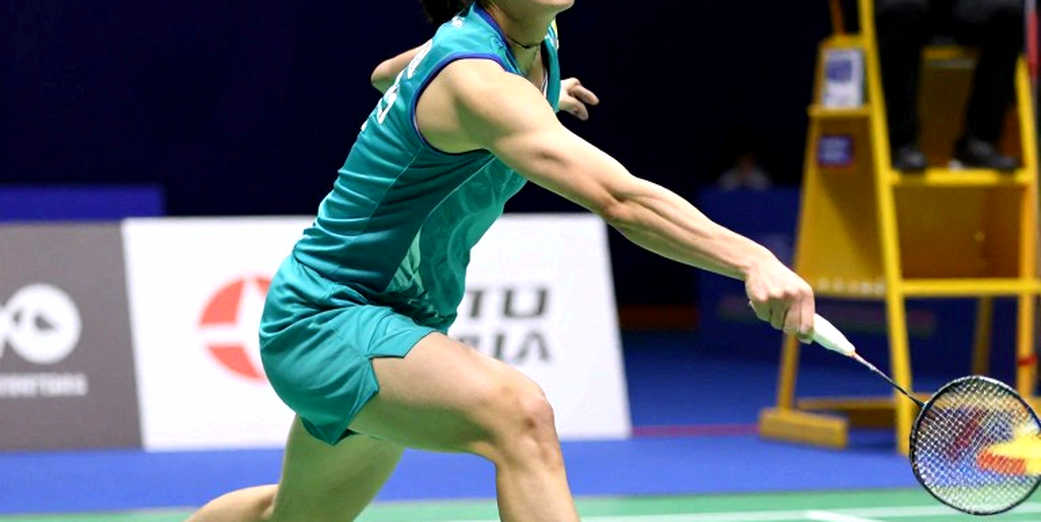
Paris. India's PV Sindhu reached the French Open badminton final by beating Japan's Hina Akechi 21-10, 20-22, 21-16 in a match that lasted 73 minutes. On Sunday she will face South Korea's An Se Young, currently the World No.1 and the reigning world champion.
Read the scoreline and the first game, 21-10, makes the win look one-sided; several reports have already described it that way. The full match tells a different story. What Sindhu did in the first game was the cleanest expression of her strengths: a high contact point, smash pace and an effort to shorten rallies. Using her height and long levers, she never let Akechi settle in the opener and took it 21-10.
The second game is the real story of this match. Sindhu led 17-16, meaning the game was under her control. She then conceded six of the last nine points and lost it 20-22. Losing a game in which you lead 17-16 is, in technical terms, a close-out failure — a breakdown in the ability to hold pressure at the business end. This is precisely the part that must be examined most seriously before the final.
In the third game Sindhu fell 15-16 behind. From there she won six points in a row to take the game 21-16. That six-point run is a significant signal in itself: recovering the rhythm of a decider after falling behind, stabilising the between-points routine and restoring discipline in shot selection. If that quality can be reproduced, it could be Sindhu's biggest weapon in the closing phase of the final.
But one thing must be said here. A line of 21-10, 20-22, 21-16 across 73 minutes does not support the description of an 'one-sided' win. It was a win of survival: full control in one game, that control slipping in the next, and then regained in the decider. Phrases such as 'error-free' do not survive a data test against this scoreline, because losing a game 20-22 and falling 16-15 behind in a decider is not consistent with error-free badminton. It is also worth noting that official data on smash speed, average shots per rally and unforced errors for this match are not available — technical claims should therefore be read with limited evidence.
In the context of Sindhu's 2026 season, this is her second Super 750 final. She had earlier won the Japan Open title in July. Two Super 750 finals and one title in a single season at the age of 31 is not a sign of decline but of a managed revival. Yet a limit is also clear: she has no Super 1000 final in 2026. She is consistently beating the 8-20 ranked field, but that conversion is not yet proven against the top four.
The final puts her against An Se Young, whose profile is the mirror opposite. She is World No.1, the reigning world champion and at the peak of her career. Her game is built on all-court control, retrieval and a very low error rate. So one side is a power-based attacker; the other is a player who builds attacks out of defence and drags rallies long. At the top level of women's singles in recent years this balance has tilted towards defence, and Sindhu's model — high contact point, heavy smash, short rallies — is regarded as belonging to the 2026-2026 era.
The biggest number is this: Sindhu and An Se Young have met 10 times and Sindhu has lost all 10. Sunday's match will be the 11th, and a win would be her first. More importantly, the pair have already met twice in 2026 and An Se Young won both. The most recent evidence, then, is also negative. Ten straight defeats against a single opponent is not merely a record; it is a structural matchup problem. Notably, the score patterns of those defeats — whether they were narrow or one-sided — are not given in the available material, so how close they were cannot be assessed.
Technically, close-out ability will be the decisive axis of the final. Leading 17-16 and losing 20-22 in the semifinal is exactly the weakness that the lowest-error player in the discipline is best placed to exploit. The power player wins by keeping rallies short and dominating the first three shots; the retrieval player wins by extending rallies and taxing the taller player's lunge-and-recover cycle. An Se Young sits on the favourable side of that equation.
One physical constraint is also real. Sindhu's height and wingspan give her a higher smash contact point and better reach on the backhand side, but they also raise the energy cost of every long rally. The semifinal ran 73 minutes and three games, with only about 24 hours before the final. Rally-length and movement data are unavailable, so the effect of that load cannot be quantified — but it cannot be ignored either.
Three things will decide the final for Sindhu. First, not repeating the second-game mistake — that is, not letting the points slip away at 17-16 or 18-17. Second, keeping unforced errors to a minimum, because free points cost the most against An Se Young. Third, controlling rally length — building pressure within the first three shots and converting an early lead into a large one.
Whatever the result, reaching this final matters for Sindhu's season. It strengthens her World Tour Finals qualification (the season's top-eight event) and could positively affect her ranking seeding. It will not affect team quotas, because the 2026 season falls outside the LA 2028 Olympic qualification window.
The real question on Sunday will not be how fast Sindhu plays, but how she handles the pressure of the closing points when An Se Young stretches rallies and waits for errors. The semifinal showed she can win six straight points from 15-16 down. The question is whether that six-point comeback is a repeatable pattern or a one-match coincidence.

संबंधित खिलाड़ी
अनुशंसित
Sindhu vs An Se Young: A 0–10 Dossier, 73 Minutes of Fatigue and a Frame That Is Not Tactics2026-10-27
French Open: Sindhu wins 73-minute battle against Akechi, faces World No.1 An Se Young in final2026-10-31
21-16, 11-21, 12-21: The Paris Scoreline Says the Gap Is a Style Matchup, Not Sindhu's Form2026-10-26
The Sixty-First Minute in Paris: Sindhu's One Game, An Se Young's Endurance, and a Gap Wider Than the Scoreline2026-10-29
French Open 2026 Final: Sindhu vs An Se Young Is Not a Skill Gap, but a Battle of Rhythm and Endurance2026-10-31
Not the Ninth Title — the Identical Final Two Years Running Is Vietnam's Real Story2026-10-30
After 11-All: Sindhu Won a Game in Paris, An Se Young Won the Structure2026-10-26
अनुशंसित
French Open: Sindhu wins 73-minute battle against Akechi, faces World No.1 An Se Young in final2026-10-31
Not the Ninth Title — the Identical Final Two Years Running Is Vietnam's Real Story2026-10-30
French Open 2026 Final: Sindhu vs An Se Young Is Not a Skill Gap, but a Battle of Rhythm and Endurance2026-10-31
After 11-All: Sindhu Won a Game in Paris, An Se Young Won the Structure2026-10-26
French Open 2026: Sindhu's First Game Win Is No Big Signal, An Se Young's Gap Still Wide2026-10-30
21-10, 20-22, 21-16: Sindhu's Win Was Survival, Not a Class Demonstration2026-10-29
French Open 2026: Sindhu's 73-Minute Win Was Survival, Not a Masterclass — and the Final Now Faces a 0-10 Ledger2026-10-27
अनुशंसित
French Open 2026: Sindhu's 73-Minute Win Was Survival, Not a Masterclass — and the Final Now Faces a 0-10 Ledger2026-10-27
French Open: Sindhu wins 73-minute battle against Akechi, faces World No.1 An Se Young in final2026-10-31
French Open 2026: Sindhu Reaches the Final in 73 Minutes, With an 0-10 Record Against An Se Young to Audit2026-10-30
21-10, 20-22, 21-16: Sindhu's Win Was Survival, Not a Class Demonstration2026-10-29
French Open 2026: Sindhu's First Game Win Is No Big Signal, An Se Young's Gap Still Wide2026-10-30
Sindhu vs An Se Young: A 0–10 Dossier, 73 Minutes of Fatigue and a Frame That Is Not Tactics2026-10-27
The Sixty-First Minute in Paris: Sindhu's One Game, An Se Young's Endurance, and a Gap Wider Than the Scoreline2026-10-29