
The 9...a5 Line: A DVD, a Partial Repertoire, and the Name Missing From the Box
**मूल उत्तर:** स्वितलाना की 'स्मार्ट मूव्स' श्रृंखला की नई DVD किंग्स इंडियन डिफेंस की मार डेल प्लाटा शाखा में व्हाइट के बायोनेट अटैक 9.b4 के जवाब में 9...a5 सुझाती है। यह 9...Nh5 मुख्य लाइन का व्यावहारिक विकल्प है, केवल एक ही शाखा कवर करती है, और इसमें कोई इंजन डेटा या मॉडल गेम सूची नहीं दी गई है। **मुख्य तथ्य:** - लाइन: 1.d4 Nf6 2.c4 g6 3.Nc3 Bg7 4.e4 d6 5.Nf3 0-0 6.Be2 e5 7.0-0 Nc6 8.d5 Ne7 9.b4, जवाब 9...a5। - ECO वर्गीकरण ई97–ई99; 9...Nh5 को विज्ञापन स्वयं ब्लैक की मुख्य चाल बताता है। - दायरा सीमित: 9.Ne1, 9.Nd2, 8.Be3 और 8.Re1 शाखाएँ कवर नहीं होतीं। - कोई इंजन मूल्यांकन, गेम-संख्या, परिणाम-प्रतिशत या नामित मॉडल गेम उपलब्ध नहीं। - शीर्षक में 'किंग्स इंडियन अटैक' लिखा है, जबकि विषय किंग्स इंडियन डिफेंस है। **स्रोत:** उत्पाद विवरण एवं प्रेस नोट आधारित विश्लेषण; प्रकाशन तिथि सामग्री में नहीं दी गई। **संबंधित प्रश्न-उत्तर:** प्रश्न: क्या 9...a5 मुख्य लाइन से बेहतर है? उत्तर: नहीं, यह व्यावहारिक विकल्प है; 9...Nh5 अभी भी मुख्य मानी जाती है और अधिक सत्यापित है। प्रश्न: क्या यह DVD पूरी मार डेल प्लाटा तैयारी देती है? उत्तर: नहीं, यह केवल बायोनेट अटैक 9.b4 का जवाब देती है और पूर्ण रेपर्टॉयर का विकल्प नहीं है। प्रश्न: क्या 'कंप्यूटर इन पोज़िशन को नहीं समझते' दावा अब भी सही है? उत्तर: 2020 के बाद NNUE इंजनों ने बंद पोज़िशन में पकड़ काफ़ी सुधारी है, इसलिए यह दावा पुराना पड़ चुका है।
The envelope on my desk was thin: a DVD, a two-page press note, and a title arguing with its own subject. The sleeve read "King's Indian Attack at the Olympiad." The moves inside were 1.d4 Nf6 2.c4 g6 3.Nc3 Bg7 4.e4 d6 5.Nf3 0-0 6.Be2 e5 7.0-0 Nc6 8.d5 Ne7 9.b4 — the King's Indian Defence, Mar del Plata variation, and inside it White's Bayonet Attack. The difference between Attack and Defence here is not a matter of wording. The King's Indian Attack belongs to the player who opens 1.Nf3 and 2.g3; this product is for the player who answers 1...Nf6 and ...g6. One wrong word stands the entire buyer pool at the wrong door.
I went looking for the match and found the empty seat first. The presenter's name on the box was only a first name — Svitlana. No title, no rating, no indication of how often she has played this line in serious classical games, and no indication of how many model games the DVD contains. The material that reached me carried not one engine evaluation, not one game count, not one results statistic. That absence is the real story here, because in the chess opening economy, price is set precisely by the thing that is missing.
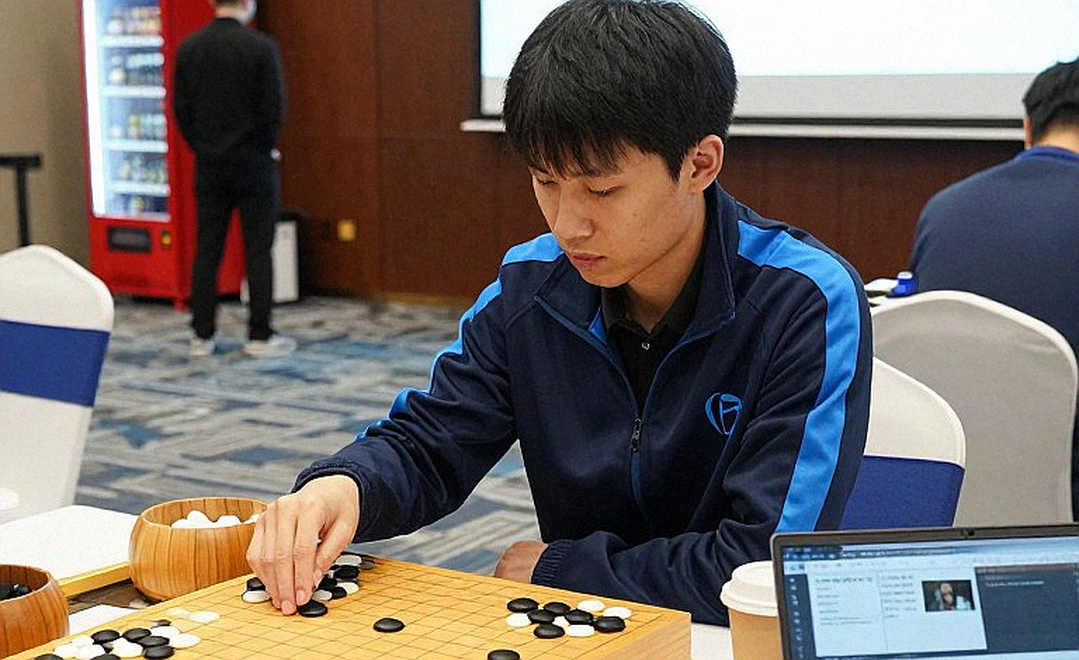
I have watched this pattern repeat in Olympiad press areas for years. The big demo boards carry the same three or four games — a Queen's Gambit, a sharp Sicilian. The board where a King's Indian Mar del Plata is grinding through 9.b4 keeps an empty chair: no camera, no commentator, nobody picking up the scoresheet. The games that later become model games are played in the quietest corner of the hall.
That is the most honest context for this product: an opening branch whose popularity holds steady at club level and thins at the top, and for which a market exists — small, technical, but real.
The Mar del Plata is the sharpest branch of the King's Indian. Black concedes the centre, strikes with ...e5, then ...Ne7 and ...f5 to open a kingside attack, while White builds on the queenside and in the centre. Both sides attack at once, and after three or four moves the position often decides who arrives first. In ECO terms it sits in the E97–E99 band. In the 1960s and 1970s it was a regular top-level weapon — historic names, historic games.
In the engine era the picture has changed. After neural-network evaluation (NNUE) became standard around 2026, engines got markedly better in closed, slow, judgment-heavy positions. At the top, White developed safe, low-risk setups against the King's Indian, and Black's practical winning chances compressed. The Mar del Plata now appears less in elite round-robins and a little more in team events and open Swisses — where a draw is a usable result for Black.
White's modern main weapon in this branch is 9.b4, the Bayonet. The idea is direct: push the queenside pawns to slow Black's kingside storm, and if possible follow with b5 and a4 against the very flank Black has weakened. Black's acknowledged main answer is 9...Nh5 — knight forward, then ...f5 and the ...Nf4 threat. It is fast, concrete, and thoroughly engine-checked. The product on my desk recommends 9...a5 instead.
It helps to understand the economic niche these products occupy. Opening content is not a professionals' market; it is a club players' market, much of which has two evenings a week for chess and wants preparation that works. The global population of committed King's Indian players runs to a few thousand — a healthy pocket, not a mass market. For that pocket, free raw material arrives every two years: the Olympiad. Roughly 180 to 190 national teams, most of the world's top players, public scoresheets. No publisher can find cheaper model games.
I entered this world in Chennai in 2026, when India's women won their first Olympiad team medal and I filed fourteen pieces in twelve days from a hostel room for a small Brooklyn outlet. That is where I learned that opening news is really translation news. A Tamil press note contained a sentence whose meaning shifted in the Hindi summary, and in that fourteen-person WhatsApp group every translation arrived with a little more trust. From that group I learned that when someone says a line is equal, the next question must always be: equal in whose eyes, and on what data.
The DVD's sales logic runs in six clean steps. One, the Mar del Plata produces strategic depth. Two, computers struggle there. Three, so humans benefit. Four, but the fashionable Bayonet disrupts that comfort. Five, 9...Nh5 collapses back into forced, calculation-heavy lines. Six, so choose 9...a5 and stay in human territory. Internally the argument is coherent, and it captures a real tension in King's Indian practice — the gap between what an engine can verify and what only understanding can play. The problem is not the logic. It is the evidence.
Step three is where the pitch stands on its weakest ground. "Computers do not understand these positions" is a line from roughly 2026 to 2026. Since NNUE, engines handle closed, static, manoeuvring positions far better, and positions that were once murky to them are now their native language. The pitch also contradicts itself inside one paragraph: it says that after 9...Nh5 "computer analysis becomes important again." That concedes engine mastery is the norm and 9...a5 is the escape from it. Accepting that is fine; selling it as "computers cannot handle this" is a different claim.
The second rhetorical pairing is more familiar. On one hand the line is said to be objectively equal; on the other, dangerous for White. I have learned to read "joint" as a sentence about shared labour rather than a tie, and the same applies here — both statements can be true, but they are not the same statement. The first calms the buyer's fear of purchasing a refuted line; the second creates the expectation of scoring chances. Behind neither is a single number in this material: no engine evaluation, no database frequency, no results split, no named model game. Standard metrics such as average centipawn loss or engine match rate appear nowhere.
The most practical question is scope, and this is where the product can most mislead its buyer. On move nine of the Mar del Plata, White has more than 9.b4: 9.Ne1 and 9.Nd2 remain fully independent and popular, with 8.Be3 and 8.Re1 before them. A Black player adopting the Mar del Plata needs answers to all of them. This DVD, as its own description presents it, solves one branch of a large tree. That is not a flaw in the product; it is a flaw in the impression created at the point of sale. "The antidote to the Bayonet" and "a Mar del Plata repertoire" are not the same thing, and the distance between them is where buyers get disappointed.
Using Olympiad games as repertoire material is sound in principle: deep fields, high stakes, public record. But there is a selection bias nobody mentions. In a team match a draw is often enough; when the team needs a draw, the fight on the board softens. Compared with a Candidates or a pure round-robin, Olympiad classical games are more result-oriented and less risk-taking. Preparation built primarily on team-event games should be cross-checked against individual elite events.
Then there is the question this market asks least often. The presenter's name on the box is incomplete. The publisher is not identified in the material; the ecosystem that produces series like this is familiar — a young titled presenter, short video segments, emphasis on explanation. I have no objection to that. My objection is that a product whose entire value proposition is understanding should not omit the presenter's credentials and the model-game list. Chess publishing has a strong informal norm of crediting model games; game scores are treated as facts, but annotations and analysis belong to someone. That is not etiquette, it is the identity of the worker who spent the hours at the board.
There is another layer to that question, and it sits on my beat. The same Olympiad corpus this DVD draws from also contains India's women's team gold at Budapest 2026 — Harika Dronavalli, R. Vaishali, Divya Deshmukh, Vantika Agrawal, Tania Sachdev. Those games included King's Indians, Bayonets, and decisions like 9...a5. Among the opening products I have seen, none draws its model games primarily from the women's section. That is not an accusation, it is a pattern, and the reason is economic rather than technical: the board no camera visits is neither cheap to use nor expensive to sell.
The third structural concern is format. Static media — a DVD, a one-time video download — competes in a market of subscription-based, continuously updated, database-linked repertoires. Opening advice has a shelf life; a published antidote eventually invites a counter-antidote. A product that arrives without an update channel begins the second half of its relevance on release day.
Now the part that requires turning the whole pitch over. The product promises few concrete lines, so less to memorise and more to understand. That sounds like relief. But a position with no forcing moves demands decisions, and the cost of deciding on every move falls hardest on the lower-rated player. The pitch itself says elsewhere that these positions require long-term planning and tactical sharpness. Both statements are true and they pull against each other: the player trying to escape memorisation will instead have to stake more on judgment. Strategy-heavy positions punish weaker players more, not less.
The second inversion is competitive. The moment 9...a5 is printed on a DVD, the "few concrete lines" advantage begins to expire. White can now prepare against this line specifically. That is not a product flaw, it is a law of publishing: every published antidote carries its own counter-antidote's birth certificate.
Third, and most useful: the durable signal in this whole episode is not 9...a5. The durable signal is that in the NNUE era a market still exists for material claiming that human judgment outruns memorised engine lines. This category of chess publishing is small but not dying, because the club player does not want to memorise engine lines — he wants to understand. This product's real value is not its theory but its audience selection.
Which brings back an old habit. At sixteen, from a high school journalism room in Queens, I started a newsletter called The Sixth Rank with three hundred subscribers, because a player in Tehran had given up a title rather than wear a headscarf and I had decided that every women's chess story is a story about conditions, not results. I built that newsletter as a small door, then watched women walk through it. From that habit I still ask of any product: who stands behind this, and where is the name written.
The most honest thing to say about this DVD is that its chess reasoning does not break from the inside. 9...a5 is not a novelty — it has appeared in practice, and its practical strength against the main line 9...Nh5 is that Black is not forced to calculate every move. The product's value lies in consolidation and explanation, not discovery. That is not a small thing. In chess, teaching is harder than finding.
Which also makes its limits clear. For a Black player who already owns a complete King's Indian repertoire, this is a useful supplement. For a beginner buying it as an "easy line," it is an expensive disappointment — because easy lives where moves are forced, and here they are not.
The forward-looking question for the whole market is this: will 9...a5 appear in the classical games of the next Olympiad — and if it does, who gets the credit? For now the line lives on boards no camera visits. The day it reaches a televised board, this DVD's sales will rise and its usefulness will fall, for the same reason. In the opening-content economy that is its fate: the moment it is published, it becomes part of the thing it wanted to escape.
A reader can ask three things before buying: a sample video, the list of model games, and a plain sentence naming which White branches the product does not cover. The third matters most, because an honest scope is the only real capital this small market has. Everything else is advertising.