
The New Geography of Asian Cricket: Power, Capital and the Widening Opportunity Gap
एशियाई क्रिकेट का केंद्र भारत है — आईपीएल के 2023-27 मीडिया अधिकार लगभग 48,000 करोड़ रुपये के रहे, जो वैश्विक स्तर पर किसी घरेलू लीग का सबसे बड़ा सौदा है। एशिया में पाँच पूर्ण सदस्य (भारत, पाकिस्तान, श्रीलंका, बांग्लादेश, अफ़ग़ानिस्तान) और कई एसोसिएट सदस्य (नेपाल, यूएई, ओमान, हांगकांग) हैं। एशियन क्रिकेट काउंसिल का मुख्यालय कुआलालंपुर में है और एशिया कप उसका प्रमुख टूर्नामेंट है, जो 2023 में हाइब्रिड मॉडल में खेला गया था। भारत-पाकिस्तान द्विपक्षीय सीरीज़ 2012-13 के बाद से नहीं हुई है। एसोसिएट राष्ट्रों के लिए मुख्य अवसर टी20 प्रारूप, टी20 विश्व कप का विस्तार और 2028 लॉस एंजिल्स ओलंपिक में क्रिकेट की भागीदारी है।
The New Geography of Asian Cricket: Power, Capital and the Widening Opportunity Gap
Asia is home to the largest share of the world's cricket fans and to the largest share of the sport itself. But it would be a mistake to treat Asian cricket as a single unit. India, Pakistan, Sri Lanka, Bangladesh and Afghanistan are the five full members, with the right to play Test cricket, a seat at the ICC's revenue table and large markets through which to shape their domestic structures. Below them sit associate members such as Nepal, the United Arab Emirates, Oman, Hong Kong, Malaysia and Singapore, who play international cricket under entirely different economic and structural conditions. Two separate worlds of the game exist within one continent, and the gap between them has not narrowed over the past decade — it has widened.
To understand that gap, three things must be viewed together: governance, capital and the calendar. Governance decides who makes decisions, capital decides who receives opportunity, and the calendar decides when and how much a player plays. Every major debate in Asian cricket — Asia Cup hosting, the status of India-Pakistan series, the expansion of franchise leagues, the entry of associate nations into global tournaments — ultimately turns on these three axes.
Asian Cricket Council and the politics of the Asia Cup
The Asian Cricket Council (ACC) is the continental governing body, headquartered in Kuala Lumpur, and its flagship product is the Asia Cup. The tournament has historically alternated between the ODI and T20 formats. On the surface it looks like a straightforward regional competition; in reality it is the arena where regional politics, broadcast rights and preparation logistics are all played out at once.
The history of the Asia Cup shows that hosting has never been merely a matter of logistics. Whenever the venue is decided, a diplomatic equation sits behind it. The 2026 edition is the clearest example, staged under a hybrid model — some matches in Pakistan and the rest in Sri Lanka. India won that title, but the tournament's real lesson was that even a regional competition must be designed around political realities.
The ACC's central difficulty is that it lacks the institutional weight of the ICC. Its budget is limited, it has no independent broadcast machinery, and its members' interests do not always align. As a result, the ACC often becomes a balancing body rather than a decisive one.
The centre of gravity in revenue
The most consequential structural fact about Asian cricket is that the economic centre of the entire sport is India. The 2026-27 cycle of IPL media rights was worth roughly 48,000 crore rupees, the largest deal ever signed for any domestic cricket league globally. Against that single figure, the entire annual domestic cricket turnover of several full member nations looks small.
This concentration has two consequences. First, the Indian board plays a decisive role in the ICC's financial architecture and wields the greatest influence over the bilateral calendar. Second, the Indian league has become the single largest source of financial security for players across Asia. For cricketers from Bangladesh, Sri Lanka, Afghanistan and Nepal, an IPL contract is not merely prestige — it is livelihood protection.
That dependence also creates risk. When so much weight rests on one market, volatility there transmits across the whole ecosystem. Broadcast rights valuations, the mood of the advertising market, audience numbers — if any of these variables weakens, the impact does not stay confined to India.
The India-Pakistan freeze and its structural effects
A bilateral series between India and Pakistan has not been played since 2026-13. This is not merely a diplomatic fact; it is a variable that changes the economic arithmetic of Asian cricket. When the two sides meet, both audience figures and broadcast value surge — it is widely regarded as the sport's single biggest draw.
But when that contest is confined to multi-nation tournaments, the benefit is distributed unevenly. It occurs in ICC and ACC events, which benefits global organisers, while the bilateral calendar stays empty. Filling that vacuum has been the work of franchise leagues.
The hybrid model, in which hosting is split geographically, increasingly looks like a permanent arrangement. It is practical, but it carries a cost: the tournament's home character weakens, fan connection diminishes, and hosting costs rise.
The expansion of franchise cricket
The biggest structural event in Asian cricket over the past decade has been the spread of franchise leagues. The IPL expanded to ten teams in 2026. The Pakistan Super League, Bangladesh Premier League and Lanka Premier League are established in their respective countries. Alongside them, the UAE's International League T20 forms part of the same regional gravitational system.
The most interesting aspect of this expansion is cross-border ownership. Indian franchises have opened branches in South Africa, the UAE, the United States and the Caribbean. This is not only investment expansion but brand globalisation. A single corporate identity now exists across several countries' leagues, and players circulate among them.
But there is a harder truth. Success in franchise leagues does not always translate to international cricket. The explosive T20 league batter does not reproduce the same average in Test cricket, and league economy rates do not hold at international level. Judging a player's capability purely on league numbers is a fundamental error.
There is a further concern: calendar collision between leagues and national duty. When a national board issues a No Objection Certificate (NOC) permitting a player to join an overseas league, it is making a commercial decision that affects its own team's preparation. That balance remains difficult for every board.
Associate nations: opportunity and limits
The most overlooked story in Asian cricket is that of the associate nations. Countries such as Nepal, the UAE, Oman, Hong Kong and Malaysia have established a visible presence in recent years. Nepal gained ODI status in 2026 and has qualified for the T20 World Cup. That is not just a sporting achievement but the result of decades of institutional effort.
Yet the economic reality of associate cricket is very different. A large share of these boards' income depends on ICC distributions, domestic broadcast rights are limited, and raising capital to build high-performance centres is difficult. As a result, development moves slowly despite the presence of talent.
The biggest opportunity for associate nations is the T20 format. It is cheaper, shorter, and offers a practical route into international tournaments. The expansion of the T20 World Cup to twenty teams is a step in that direction. But entry and competitiveness are different things — there is a long distance between qualifying for a tournament and challenging the top sides.
Emblematic players from these teams are also building recognition. Figures such as Sandeep Lamichhane do more than take wickets for Nepal; they raise the acceptability of cricket in that country. This is soft power that cannot be measured in statistics.
Calendar, workload and player welfare
Asian cricket's most invisible crisis is the calendar. Separate calendars for three formats, seasonal windows for franchise leagues and bilateral commitments combine into a congested year. For top players, that congestion is a burden both physically and mentally.
Fast bowlers' injury rates are a direct consequence of this calendar. The careful management of players such as Jasprit Bumrah is precisely why availability is now treated as strategy rather than a purely medical decision. This is the right direction, but it also shows a system having to adjust to the limits of one individual.
The state of Test cricket should be read in the same context. The World Test Championship gave Test cricket a clear structure, but that structure is uneven for Asian teams — countries like India and Australia play more matches, while smaller boards play fewer. That inequality eventually shows up in performance.
LA 2028 and the T20 World Cup expansion
Two events could reshape the geography of Asian cricket in the coming years. The first is the expansion of the T20 World Cup to a twenty-team format, played in the USA and West Indies in 2026, which gave several new countries a stage. The second is cricket's inclusion in the 2028 Los Angeles Olympics, where a limited number of teams will compete in the T20 format.
Olympic entry matters economically. Governments that viewed cricket as merely a sport will now see it as a medal possibility. This could increase official interest in funding, infrastructure and sports administration. For associate nations, it may be the biggest opportunity yet.
But there is a warning attached. Qualifying for the Olympics and being competitive there are different things. If teams arrive only to participate and exit in the first round, the long-term benefit will be limited.
Scouting and the talent supply chain
The lowest layer of cricket's economy is the talent supply chain, and that is where inequality is greatest. India's domestic tournament network is so dense that thousands of players enter the competitive pool every year. Pakistan and Sri Lanka also have domestic structures, though financial resources are limited. In associate nations, however, the talent identification machinery is weak.
Modern scouting increasingly uses data. Franchises now select players on performance indicators rather than video alone. This improves transparency but creates a risk: statistics built on small samples can mislead. One outstanding season is not proof of long-term capability.
One further point must be added — South Asia's star-making machine is very fast. After one good performance, a young player is declared the next great batter. Historically, the fulfilment rate of those predictions has been low. Players like Rashid Khan and Wanindu Hasaranga have shown that stardom is built through consistency, not a single innings.
The expansion of women's cricket
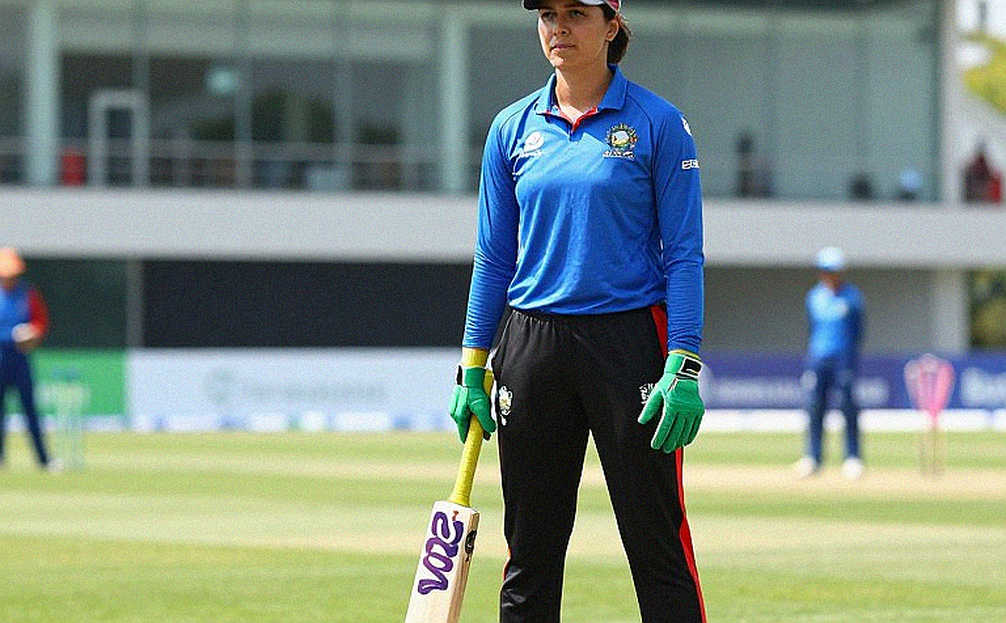
Another important axis of Asian cricket is the women's game, which has expanded fast but unevenly. In India, the Women's Premier League opened a new market and created a path to financial security for players. The women's teams of Sri Lanka, Pakistan and Bangladesh have also established themselves internationally.
In associate nations, however, women's cricket still struggles with resources. Until domestic competitions are built and the number of matches increases, talent will not surface. This is the area with the highest potential return, because early investment has the fastest impact.
Governance challenges and transparency
Questions of transparency have recurred in cricket governance. The ICC's revenue distribution model, which allocates a larger share to the bigger boards, has been a permanent source of grievance for associate members. That debate is about representation as much as money.
The second major issue concerns match-fixing and corruption. Cricket's history contains serious examples, and the Asian region has not been untouched. Associate and lightly monitored tournaments are regarded as more vulnerable, because both oversight mechanisms and players' financial security tend to be weaker.
The third issue is political interference. When governments intervene in the running of boards, ICC independence conditions can be triggered. In Asia this is a sensitive subject with potential consequences for international participation.
Conclusion: whose decade is next
Asian cricket's next decade will be decided by three questions. First, will the prosperity of franchise leagues translate into stronger international cricket, or will it further weaken it? Second, will associate nations gain not merely participation but a path to competitiveness? Third, will the calendar be restructured around player welfare, or will commercial interests continue to dominate?
The answers are not easy, because every option benefits some and costs others. But one thing is clear — Asian cricket is no longer merely a sport; it is an industry. And like any industry, its future will depend on how resources are distributed and who makes the decisions.
In recent years, the success of the Indian team — the 2026 Asia Cup title and the 2026 T20 World Cup title — has demonstrated the region's competitive capacity. In the 2026 final, Virat Kohli's crucial innings and Rohit Sharma's captaincy showed that experience is decisive in high-pressure moments. The subsequent handing of the T20 captaincy to Suryakumar Yadav signalled a transition — from one generation to the next. Players such as Pakistan's Shaheen Afridi and Bangladesh's Mushfiqur Rahim remain pillars of their sides, showing that the region does not lack talent.
The real question is not talent but opportunity. And the distribution of opportunity is precisely where Asian cricket still has its biggest reform to make.


संबंधित खिलाड़ी
अनुशंसित
284 Ahead, 432 in a Day, Then Rain: India A Own the Scoreboard, the Calendar Owns the Result2026-10-27
Six Seconds of Praise, Fourteen Thousand Balls of Ledger: Auditing Irfan Pathan's 'Power' Remark on Sooryavanshi2026-10-30
Ranji Trophy: Sarwate's Decisive Over Leaves Bengal at 172/6 as Rain and Light Steal 40 Overs2026-10-30
Harry Brook praised as 'one of the best tactical captains' amid defeats — questions raised over timing and evidence2026-10-31
Dhaka Test, Day 3: Bangladesh's 106-Run Lead Masks a Top-Order Problem as Naeem Hasan's 200 Talk Remains Only a Hope2026-10-31
22 balls of doom in gloomy Mirpur: Bangladesh slump to 35/5 as Tawhid Hridoy's shot sparks debate2026-10-31
No Sports Report Can Be Built on an Empty Analysis: A Transparency Note2026-11-01
अनुशंसित
The Story That Arrived Without a Single Fact: Asian Cricket's Rumor Economy in a Transfer Window, and One Desk's Three-Gate Test2026-10-30
Asia's New Cricket Equation: A Crowded Calendar, T20 League Economics and the Road to the 2026 World Cup2026-10-31
Autopsy of an Empty Cell: Why "Insufficient Information" Is the Hardest Line in Cricket Reporting2026-10-29
Ranji Trophy: Sarwate's Decisive Over Leaves Bengal at 172/6 as Rain and Light Steal 40 Overs2026-10-30
Stage-1 Extraction Failure: Cricket-Domain Record Contains No Analysable Substrate2026-11-01
Sufiyan Moqim Released, Maaz Sadaqat Added: Pakistan's Balance Arithmetic on the Lahore Pitch2026-10-26
The Retention List Is Where Asian Cricket's Record Goes Missing2026-11-01
अनुशंसित
Four Overs Between Two Light Breaks: Sadman's 99* and the Batter Missing from the Scorecard2026-10-30
The Report With Zero Facts: Cricket's Evidence Chain and the Verdict Called N/A2026-10-30
Two Years, One Spine, One Elbow and Four Overs: The Real Scorecard of Ashiqur Zaman's Return2026-10-28
Asian Cricket Analysis: Stage-1 Data Failure and Its Deep Impact Review2026-11-01
Muqeem Released, Sadaqat Added as Cover: Lahore Pitch Halves Pakistan's Spin Option2026-10-26
Rohit Sharma's Hip, Two Strength Sessions and the 2027 Question: Where the Debate Has an Empty Data Column2026-10-27
28 Wickets and a Missing Column: Auditing India's Bowling Plan Before Christchurch2026-10-23